UADY - UNAM Tree Diversity Experiment (Mexico)
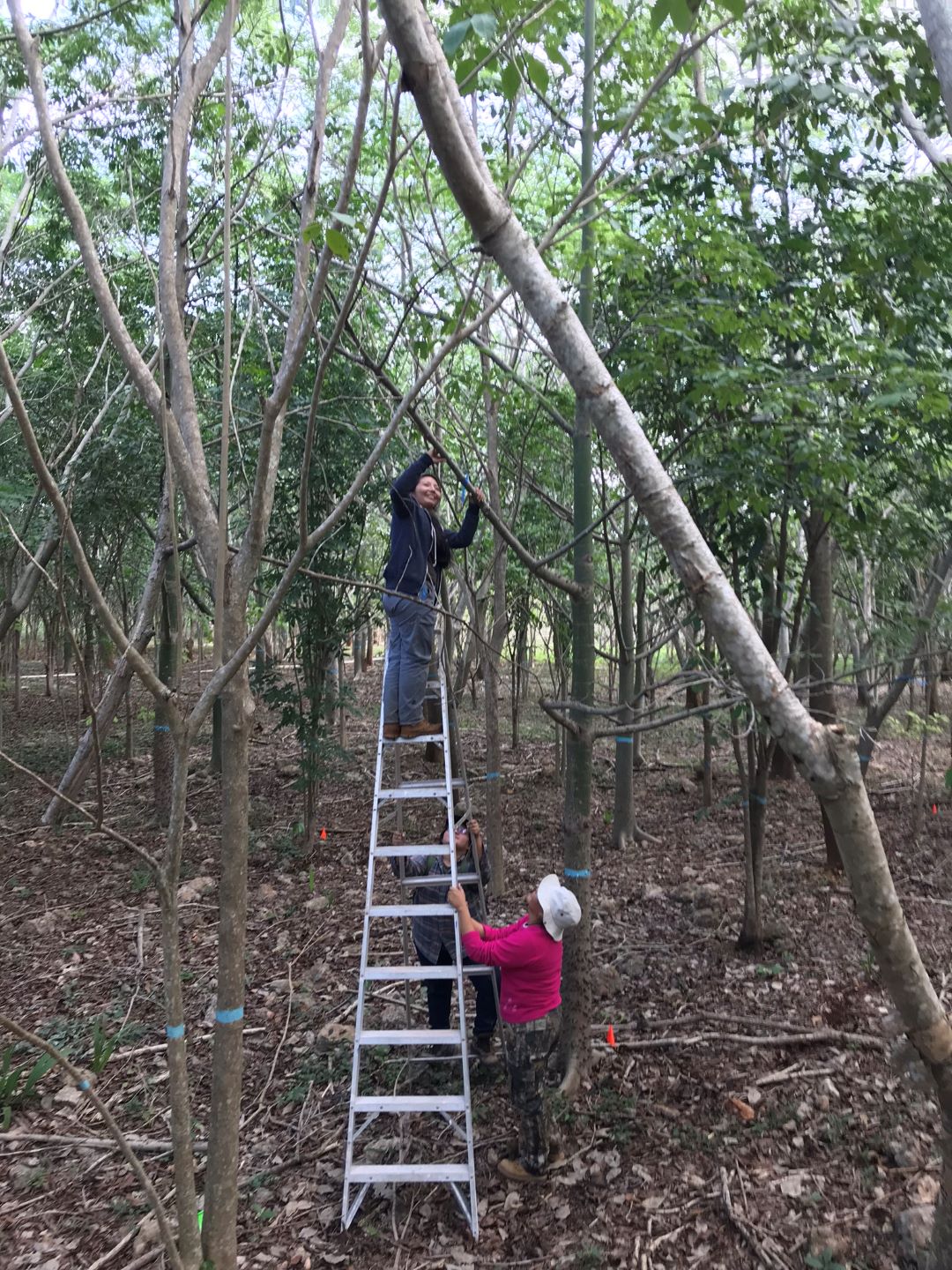
The UADY-UNAM Tree Diversity Experiment was established in Yucatan, at a site owned by INIFAP (Mexican Institute for Forestry and Agriculture), in December 2011. To test for species richness effects, two types of plots were planted: monocultures and four-species mixtures. For big-leaf mahogany (Swietenia macrophylla), one of the component species, we also manipulated the number of genotypes (maternal lines) to test for effects of genotypic diversity within this species. Tree growth, functional traits, and bi- and tri-trophic interactions between trees, herbivorous arthropods, and natural enemies of these herbivores are being studied.
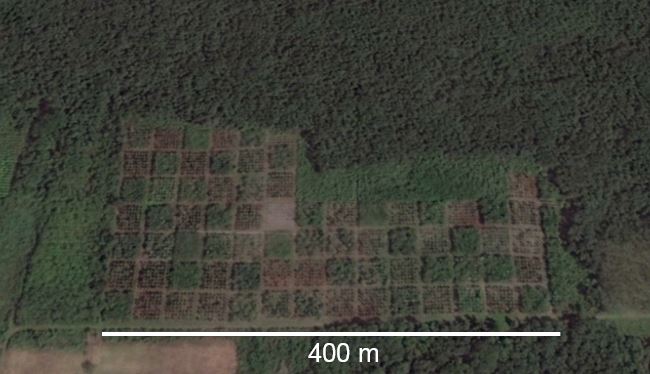
Design
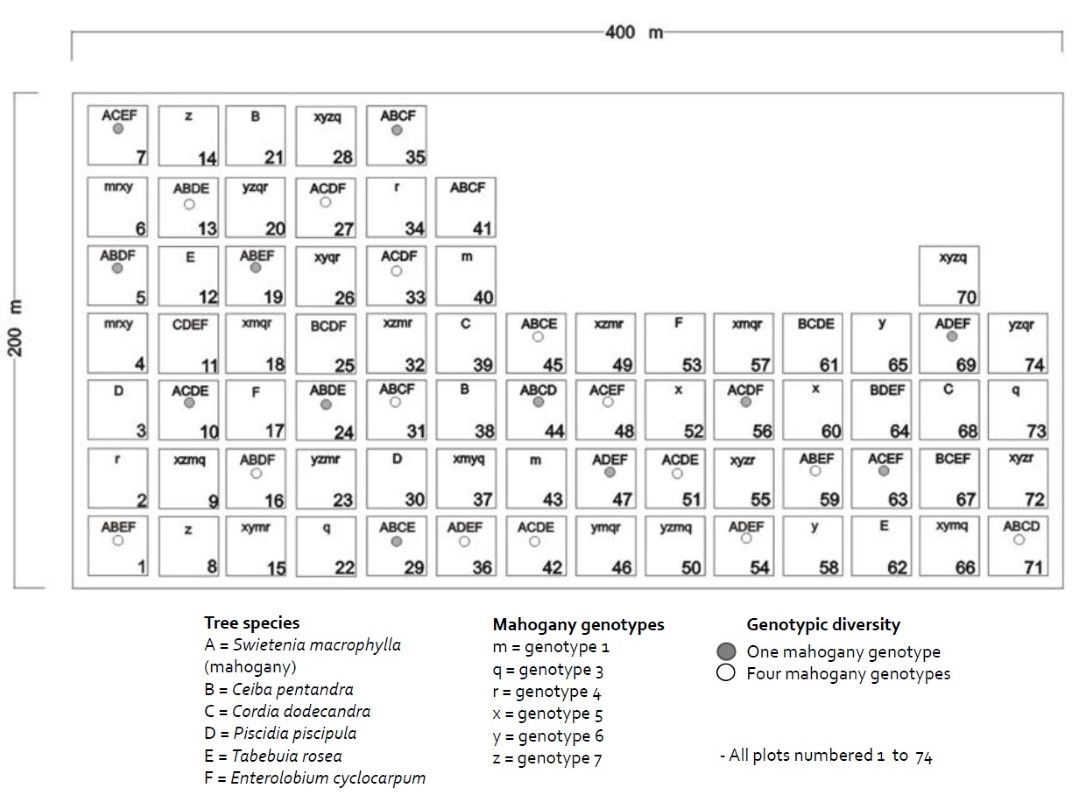
The experiment consists of 74 plots of 21 m x 21 m. Monocultures (two plots per species, except for mahogany) and four-species mixtures were planted. Mahogany was planted in 59 of the 74 plots: 12 mahogany monocultures of a single maternal line or genotype (2 plots/genotype), 20 mahogany monocultures containing four mahogany genotypes, 12 four-species plots in which all mahogany saplings were of one genotype (two plots/genotype), and 15 four-species plots within which four mahogany genotypes were planted. Thus, mahogany genotypic diversity is fully crossed with tree species diversity.
The species and genotype richness treatments contain equal numbers of individuals of four species or four mahogany genotypes. In addition, all the non-mahogany species are equally represented across the four-species mixtures, with each species present in six plots. Similarly, each mahogany genotype is represented in a similar number of the four-genotype mahogany monoculture plots (8 or 9 plots per genotype). Besides, each genotype is also present in a similar number of four-species mixtures in which the four genotypes were planted together (9 or 10 plots per genotype). The plots of each diversity treatment combination were randomly distributed throughout the experimental site.
Seeds of all species were collected from adult plants in southern Quintana Roo (México) between January and March 2011. The distance among the source trees ranged from 1.5 to 50 km. Seedlings were four months old when planted.
Site characteristics
| UADY-UNAM (Muna) | |
|---|---|
| Country | Mexico |
| Biome | tropical |
| Latitude | 20.41 |
| Longitude | -89.75 |
| Soil type | calcic cambisols and luvisols |
| Former land use | orchard, pasture |
| Altitude | 20 m |
| Design | stem wise randomisation |
| Plot shape | square |
| Plot size (m^2) | 441 m² |
| Plant distance (m) | 3 |
| Number of trees planted | 4780 |
| Planting date | 2001 |
| Diversity variables | species richness genotype richness |
| Diversity gradient | 1, 4 sp. 1, 4 genotypes (mahogany) |
| Size species pool | 6 species 6 genotypes |
| Species pool | Ceiba pentandra Cordia dodecandra Enterolobium cyclocarpum Piscidia piscipula Swietenia macrophylla Tabebuia rosea |
| Contact person | Luis Abdala Roberts |
| luis.abdala@enesmerida.unam.mx |
Research
The effects of tree species diversity and mahogany genotypic diversity on herbivory and parasitism associated with these herbivores are monitored from the start of the experiment. Much of this work has been centred on insect herbivores feeding on mahogany (e.g., leafhoppers, stem borers, and leaf miners) for which both diversity effects can be evaluated. In addition, diversity effects on plant functional traits (e.g., architecture, anti-herbivore defences), tree growth, and bi- and tri-trophic interactions between plants, herbivorous arthropods, and natural enemies (other arthropods and birds) of these herbivores are also investigated.
Extra information
For more information on the UADY-UNAM Tree Diversity Experiment, send an e-mail to the contact person, or explore the publications that utilized data from this experiment.
Research papers
- This experiment is working hard on the first international publications
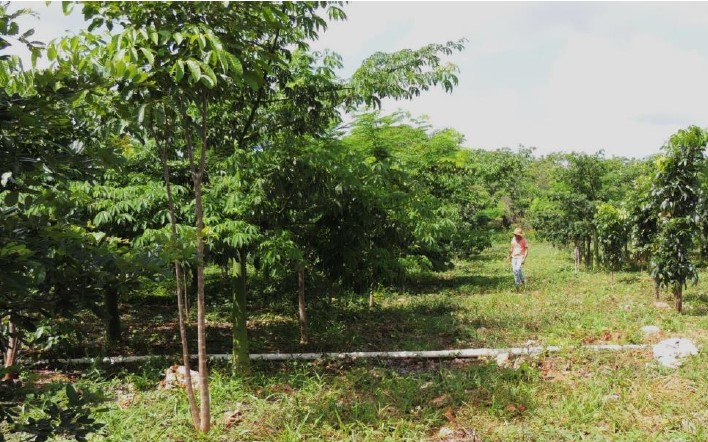
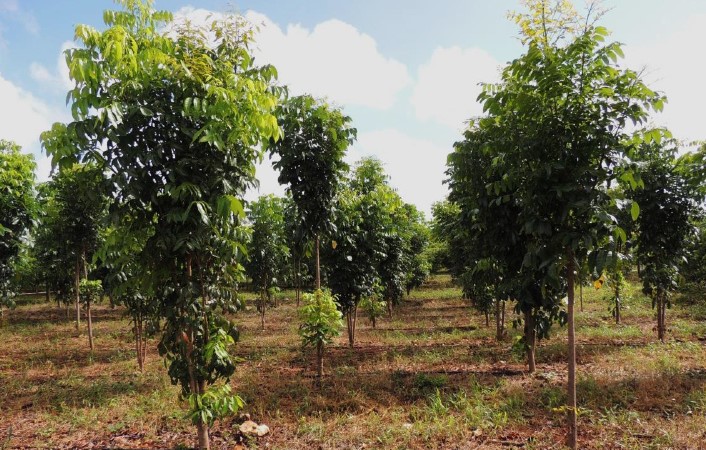
A corridor between a mixture and monoculture, and a mahogany (Swietenia macrophylla) monoculture 1.5 years after the start of the experiment (June, July 2013)
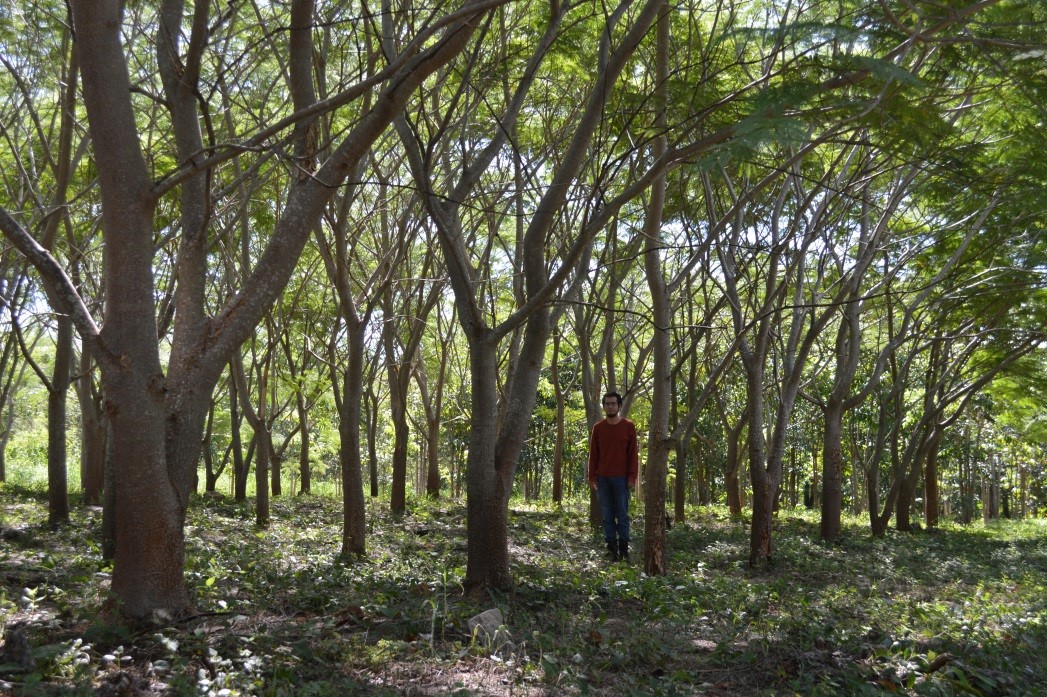
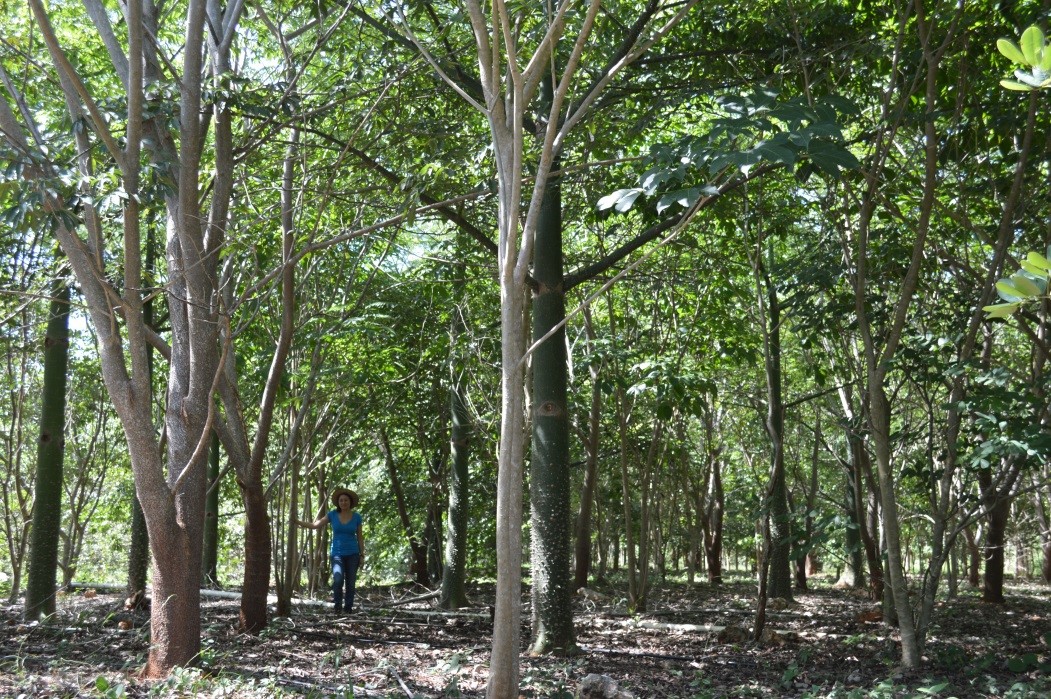
A monoculture (Enterolobium cyclocarpum) and a mixture 3.5 years after the start of the experiment, with the trees 6 to 12 m tall, depending on the species (August 2015)